In an age where technology reshapes education, the ability to create study notes with AI offers remarkable advantages for students, educators, and lifelong learners alike. Leveraging artificial intelligence for note-taking not only streamlines the process but also enhances organization and retention of information. As the complexities of learning continue to evolve, understanding how to effectively utilize AI can transform your study habits, making them more efficient and impactful. This article will guide you through practical applications of AI tools, equipping you with strategies to elevate your study methods.
Article · Create Study Notes
How to Create Study Notes with AI for Better Learning
Discover effective ways to create study notes with AI, enhancing your learning experience through innovative tools and methods for improved retention.
Understanding the Benefits of AI in Note-Taking
Utilizing AI for creating study notes provides several distinct advantages over traditional methods. For starters, AI can vastly improve the efficiency of note-taking by summarizing long texts into concise bullet points or key ideas. This means you can focus on understanding the material rather than spending excessive time writing notes. Moreover, AI tools can help organize information into structured formats, making it easier to navigate complex subjects. For instance, a student studying for an exam can input vast amounts of data from textbooks or lectures, and the AI can distill this into clear, manageable segments.
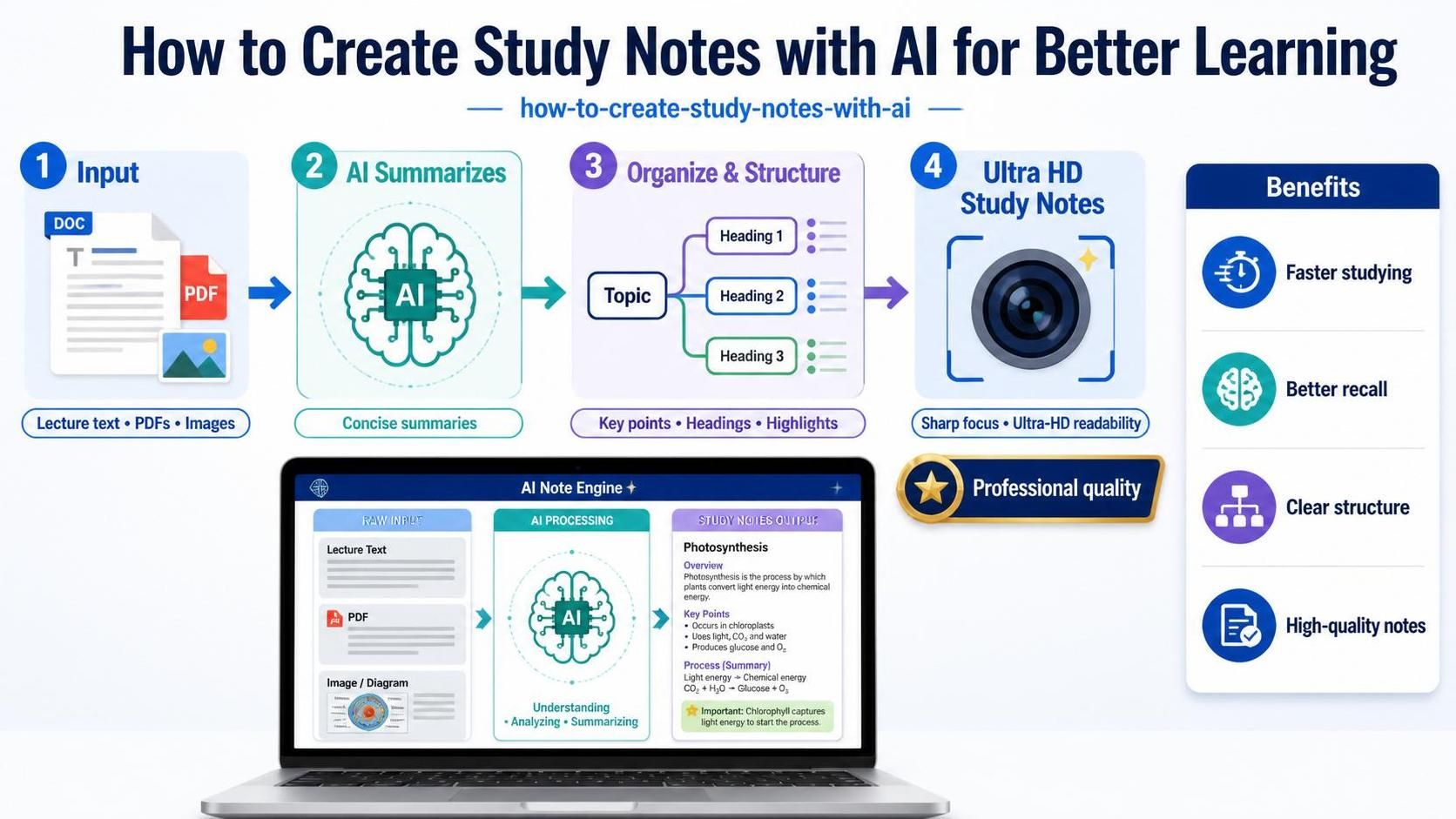
Additionally, AI algorithms often include features that enhance memory retention. Some tools use spaced repetition and personalized learning pathways, enabling you to revisit concepts at optimal intervals, which has been shown to significantly boost retention rates. This dual benefit of saving time and enhancing memory makes AI an invaluable resource for students.
Popular AI Tools for Creating Study Notes
There’s a wide array of AI-powered tools available that can facilitate the note-taking process. Here’s a closer look at some popular options:
- Otter.ai: Ideal for transcribing lectures in real time, Otter.ai captures spoken words and translates them into formatted notes which can be edited and shared. It proves particularly useful during fast-paced lectures where writing may be cumbersome.
- Notion: Combining note-taking, task management, and database organization, Notion allows users to create interconnected notes and documents. Its AI capabilities assist in organizing content, utilizing templates, and suggesting relevant tags or categories.
- Roam Research: This tool emphasizes networked thought and helps visualize relationships between different concepts. Its AI-driven suggestions can help students understand how disparate topics interconnect, proving beneficial during essay writing or project research.
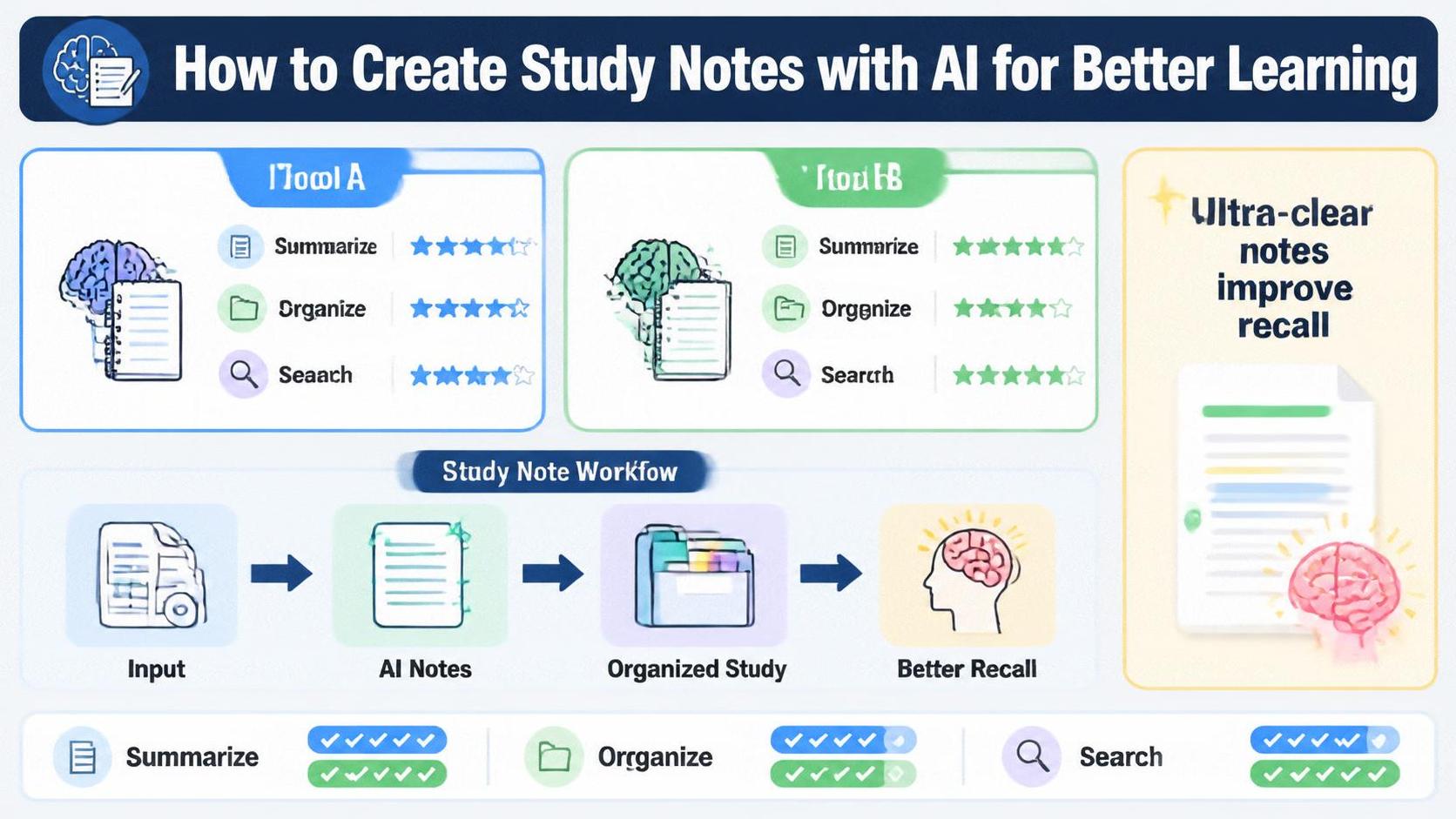
- Microsoft OneNote: With built-in AI functionalities, OneNote enables users to search their handwritten notes or images, making it simpler to retrieve important information quickly. Additionally, it integrates seamlessly with other Microsoft Office tools for enhanced productivity.
Each of these platforms brings unique features, so it’s worth experimenting with a few to find what best fits your study habits and requirements.
Techniques for Creating Effective Study Notes with AI
Effectively creating study notes with AI requires more than just using the right tools; it also involves mastering specific techniques. Here are some proven strategies:
- Summarization: Most AI note-taking tools excel at summarizing lengthy content. Begin by uploading or inputting text from textbooks or lecture recordings into the AI tool, allowing it to generate concise summaries. These summaries serve as the foundation for your study notes.
- Keyword Extraction: Many AI tools offer features to highlight or extract keywords. Use this functionality to identify the most important terms within your topic, enabling focused review sessions later on.
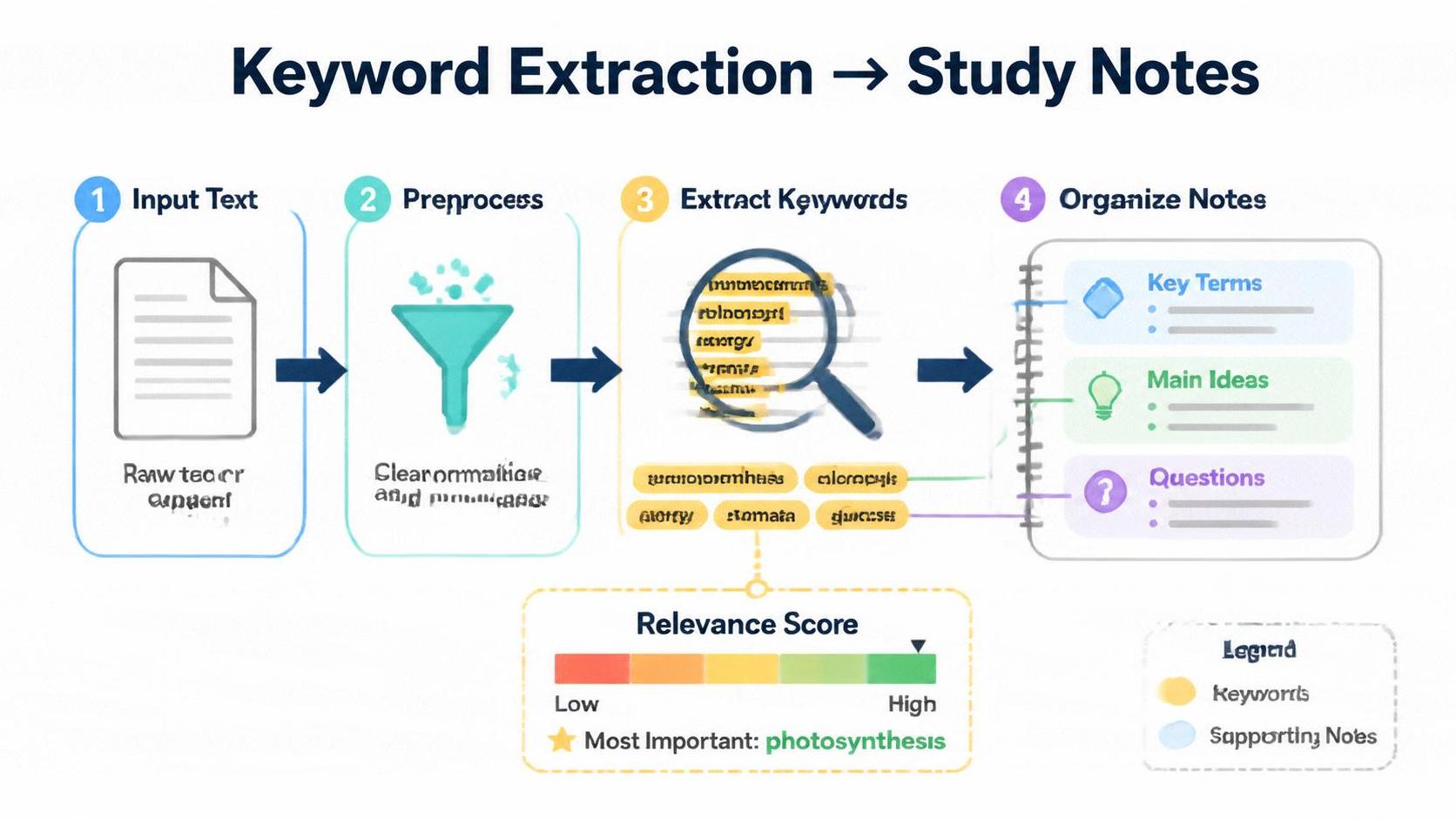
- Visual Aids: Leverage AI tools that allow for the integration of visual elements, such as mind maps or diagrams. Visual aids enhance understanding and retention by breaking down complex information into digestible formats.
- Interactive Learning: Use AI to create interactive quizzes or flashcards based on your notes. Tools like Quizlet can work hand-in-hand with your AI-generated notes to facilitate active recall, which is essential for long-term memory retention.
Lastly, ensure that your notes are periodically reviewed and updated. AI can suggest when to revisit notes, allowing for consistent engagement with the material even after the initial learning phase is over.
Integrating AI with Study Techniques
To maximize efficiency in studying, integrating AI tools with proven study techniques is key. Here are suggestions on how to meld them:
- SQ3R Method: This study technique consists of Surveying, Questioning, Reading, Reciting, and Reviewing. After gathering information through AI, apply SQ3R to enhance comprehension further. For instance, after summarizing a chapter with AI, formulate questions and attempt to answer them in your own words.
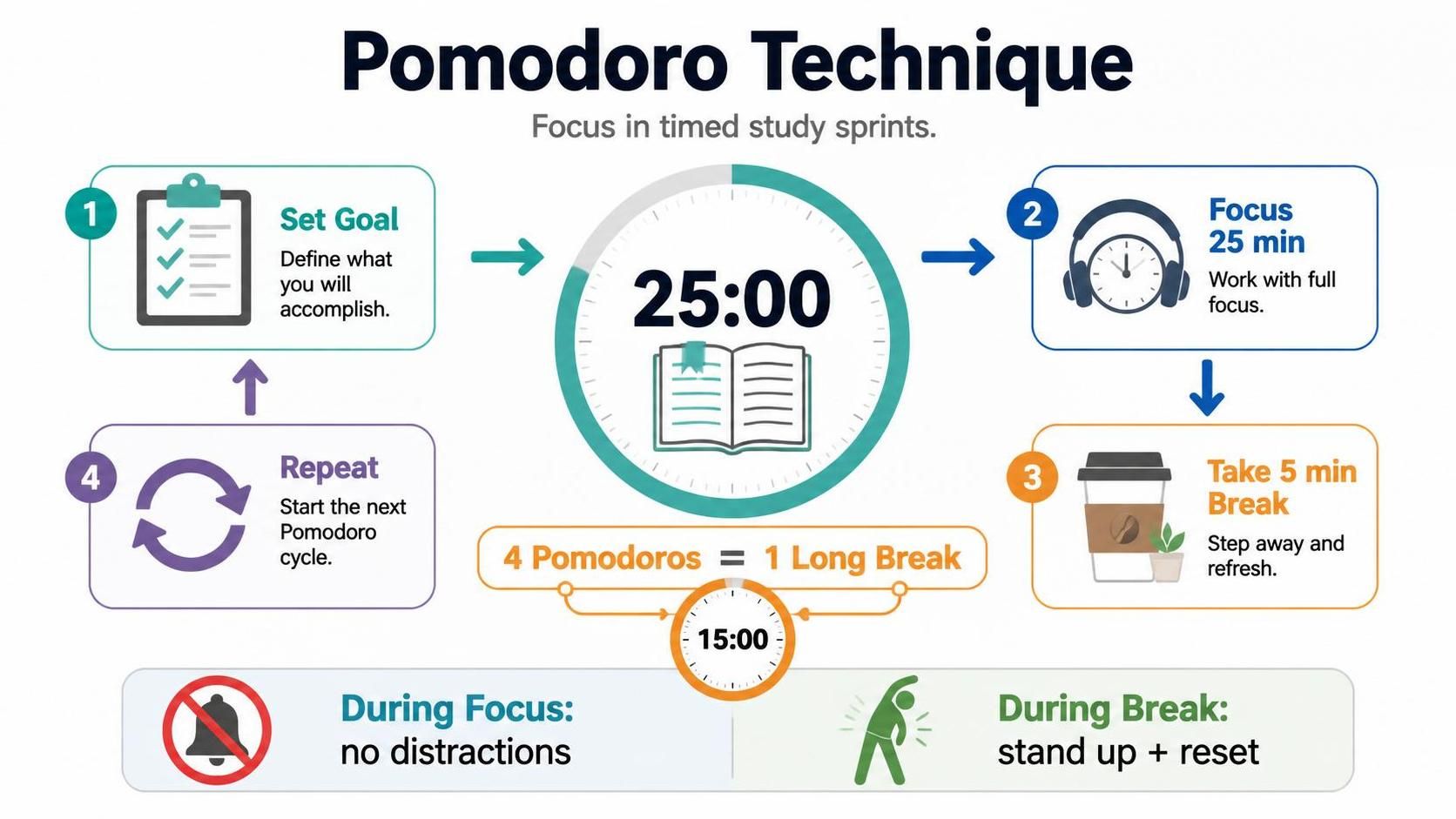
- Pomodoro Technique: This time management method involves studying in focused intervals (usually 25 minutes) followed by short breaks. Use AI tools to track your time spent on note creation and reviewing material. This can help you maintain a productive rhythm without feeling overwhelmed.
- Mind Mapping: Create a visual representation of your notes utilizing AI tools to suggest connections between ideas. This approach can significantly enhance memory recall as it allows for visual associations, providing a comprehensive understanding of the subject.
Challenges of Using AI for Note-Taking
Though the benefits of creating study notes with AI are abundant, there are potential challenges that users should be aware of.
- Overdependency: Relying solely on AI for note-taking can hinder the development of your own summarization skills. It is essential to balance AI assistance with active engagement in writing and processing information independently.
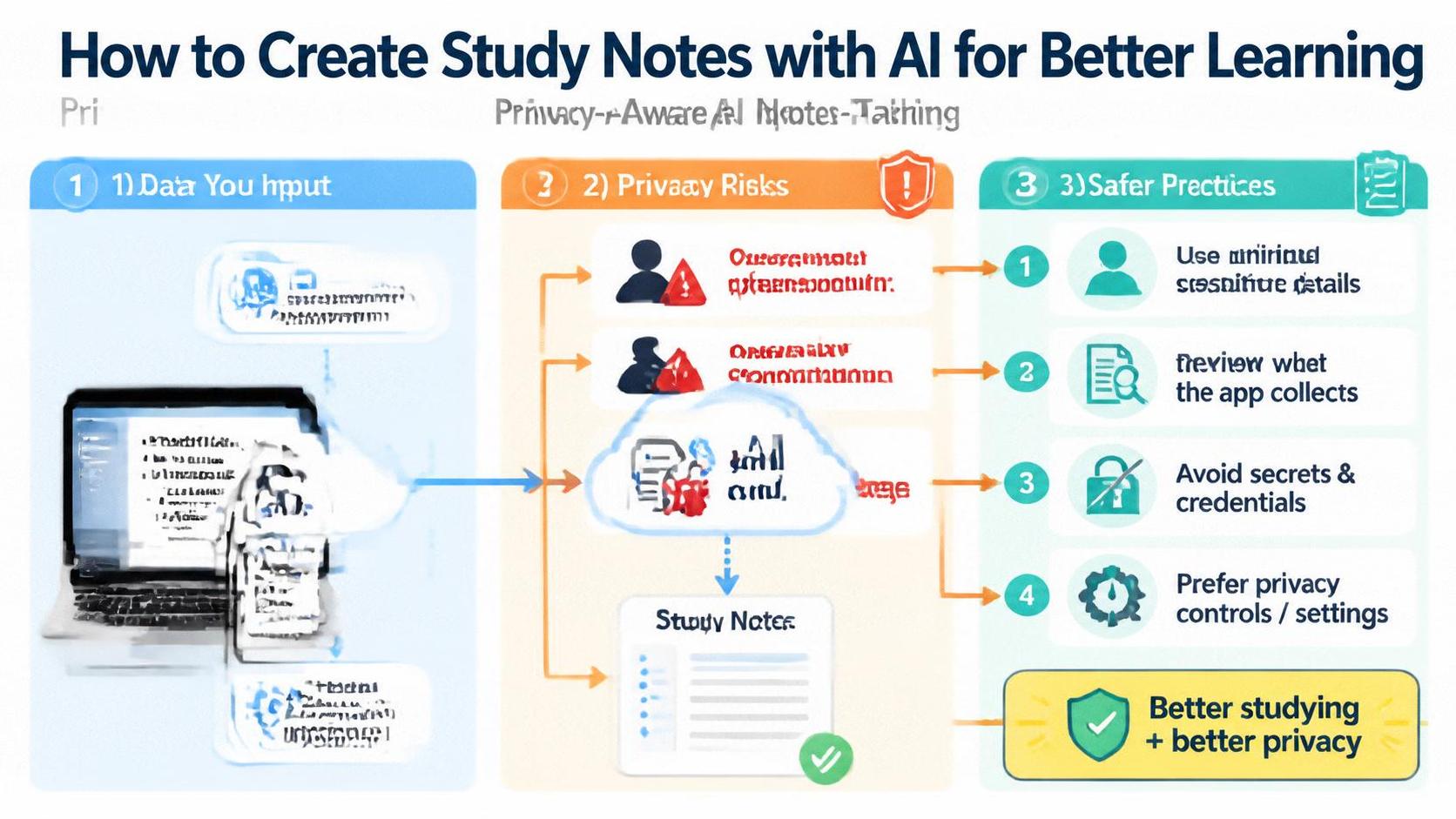
- Data Privacy: With AI tools often requiring personal data input, concerns about privacy and data misuse can arise. Always vet tools for compliance with privacy regulations and understand their data handling policies.
- Accuracy Concerns: AI tools can occasionally misinterpret context. It’s crucial to review and edit AI-generated notes to ensure they accurately reflect the intended information. Always cross-reference with original sources to maintain accuracy.
By being cognizant of these challenges, you can use AI more effectively, ensuring that it serves as an enhancement rather than a crutch.
The Future of Study Notes with AI
As technology continues to evolve, the future of study notes with AI seems promising. Upcoming advancements may include even more refined natural language processing capabilities, enabling AI to understand context, nuances, and individual learning styles more intuitively. Additionally, integration with virtual learning environments will likely become more seamless, allowing for real-time adjustments based on student performance.
Moreover, as educational institutions increasingly adopt AI-based solutions, students can expect tailored experiences that cater to their learning needs. Imagine AI that not only aids in note-taking but also adapts study materials to fit your understanding and pace—this is the future that lies ahead.
In conclusion, harnessing AI to create effective study notes holds vast potential for improving learning outcomes. By understanding the tools available, developing sound techniques, and remaining mindful of challenges, today’s students are poised to revolutionize their approach to studying. With continuous advancements in AI technology, the transition from traditional note-taking to an AI-assisted methodology will undoubtedly enhance educational experiences for generations to come.
Frequently asked questions
AI enhances efficiency by summarizing content into concise points and organizing information, making complex subjects easier to navigate.
Popular AI tools include Otter.ai for transcription, Notion for organization, Roam Research for visualizing concepts, and Microsoft OneNote for integrated note management.
Effective techniques include using AI for summarization, keyword extraction, integrating visual aids, and creating interactive quizzes or flashcards.
The SQ3R method involves Surveying, Questioning, Reading, Reciting, and Reviewing, which can be enriched by using AI-generated summaries to formulate questions.
While using AI tools, it's important to vet them for compliance with privacy regulations and understand their data handling policies to ensure security.
Challenges include overdependency on AI, potential privacy issues, and the need for users to ensure the accuracy of AI-generated notes.
Many AI tools incorporate spaced repetition to help users revisit concepts at optimal intervals, which enhances long-term memory retention.
Visual aids help break down complex information into manageable formats, enhancing understanding and retention of study materials.
Experiment with different AI tools to see which features align with your preferences and learning style for effective note-taking.
The Pomodoro Technique involves studying in focused intervals followed by breaks, and AI can help track time spent on note creation and reviewing material.