
In an age where information overload is a common challenge, turning notes into valuable learning tools can significantly enhance comprehension and retention. An ai-question-generator offers a novel approach by transforming written notes into meaningful questions, catering to educators, students, and professionals alike. This technology not only streamlines the learning process but also fosters deeper engagement with the material. As we explore the mechanics and benefits of AI question generation, you’ll discover how to maximize your learning potential and effectively assess your understanding.
Article · Ai Question Generator
Transform Your Notes with an AI Question Generator
Discover how an ai-question-generator can turn your notes into insightful questions, enhancing learning and assessment in education and beyond.
Understanding AI Question Generation
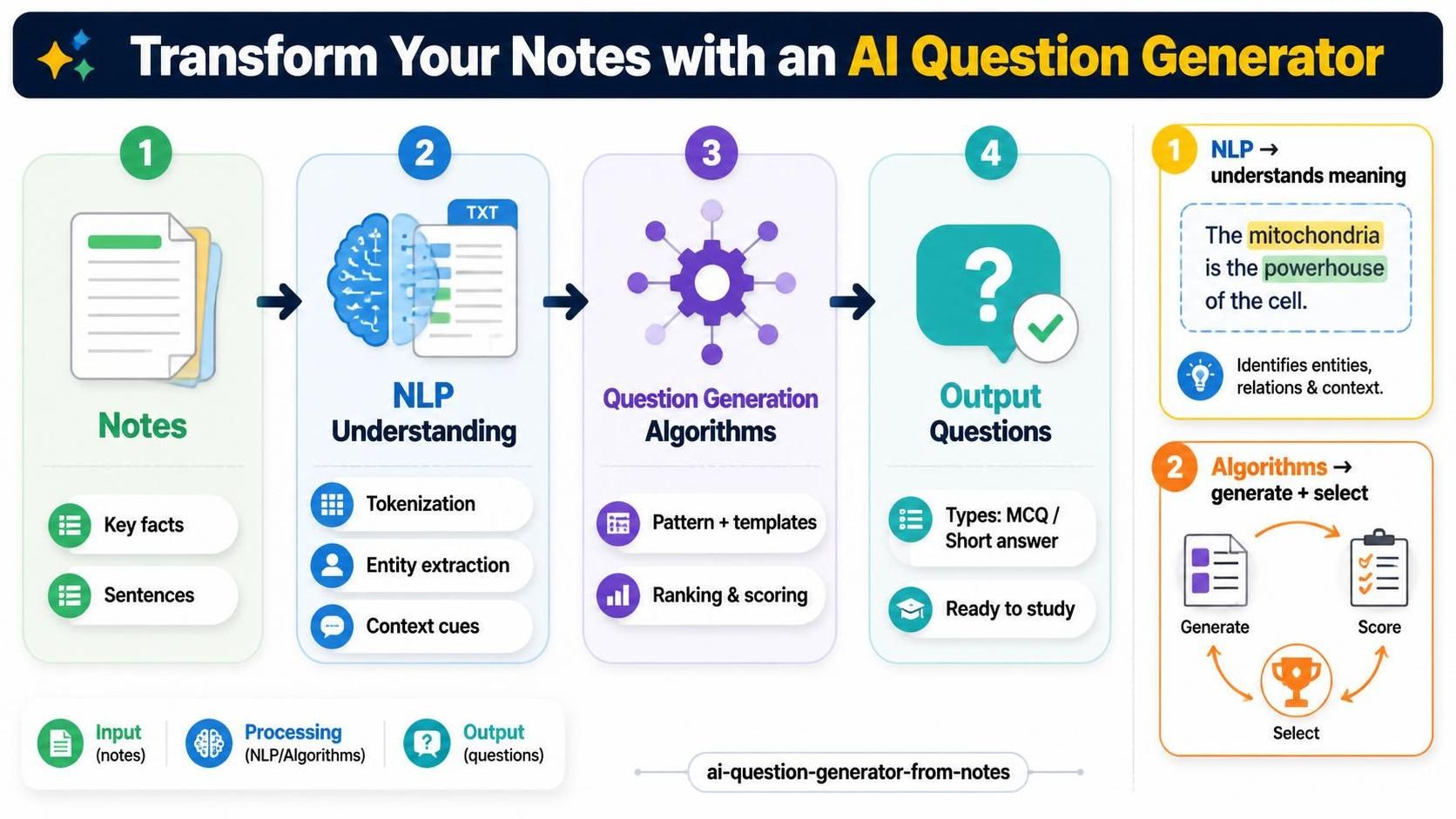
Artificial Intelligence (AI) has revolutionized numerous sectors, and education is no exception. At its core, an ai-question-generator leverages natural language processing (NLP) and machine learning algorithms to analyze textual data—such as notes—and generate questions that align with the content. This capability allows for the transformation of passive notes into interactive learning prompts, driving both comprehension and retention.
The underlying technology behind AI question generation often involves complex algorithms that discern the context, terminology, and key concepts within the text. By interpreting sentence structure and semantic relationships, these systems can formulate relevant questions that challenge users, stimulate thought, and facilitate a deeper engagement with the material.
The Mechanics of AI Question Generators
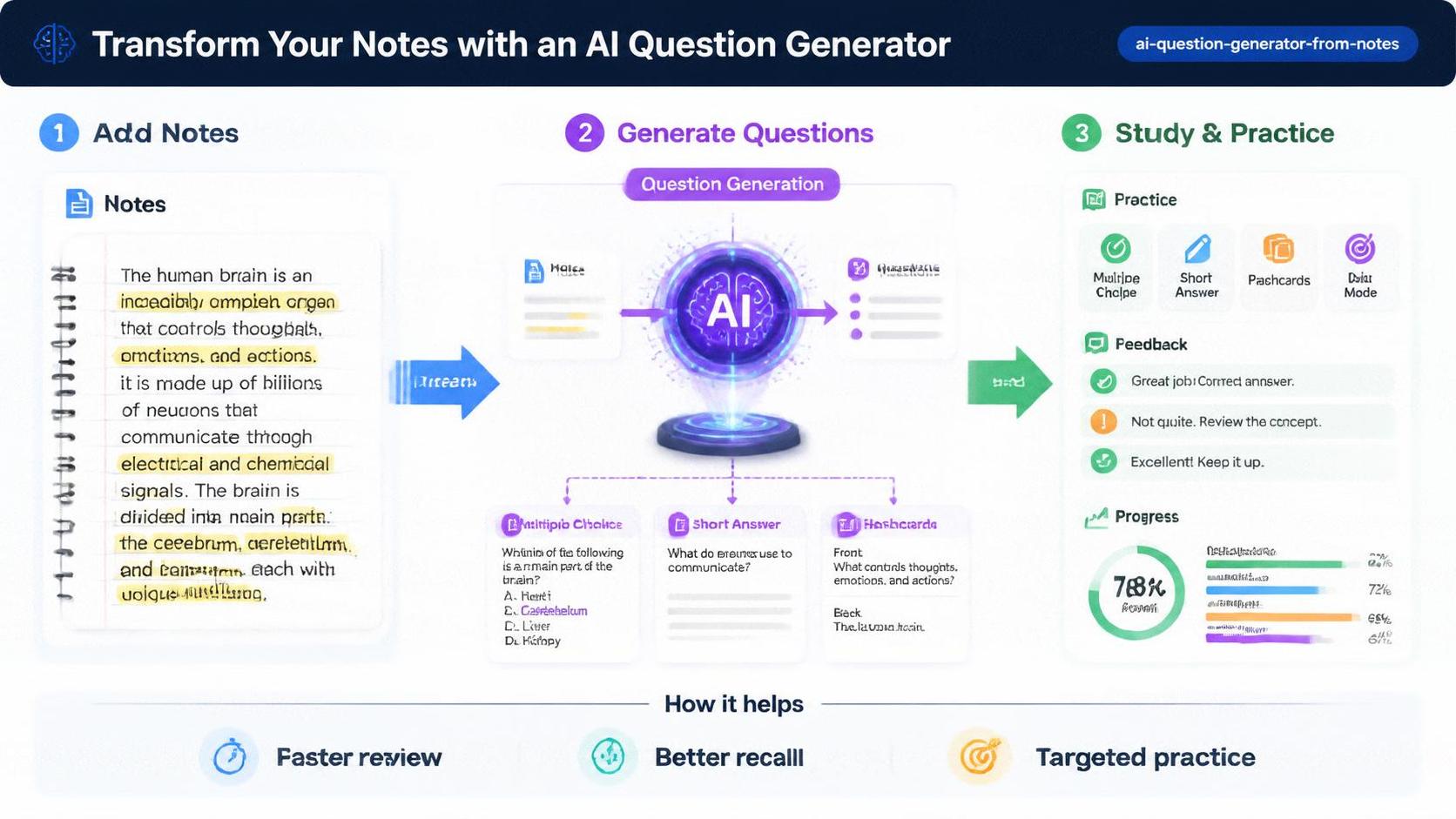
To understand how an ai-question-generator works, it's essential to explore its methodology. Most systems follow a multi-step process: first, they analyze the input text to identify key points, themes, and important facts. Through various techniques, such as keyword extraction and concept mapping, the AI filters out essential information that serves as foundational material for question generation.
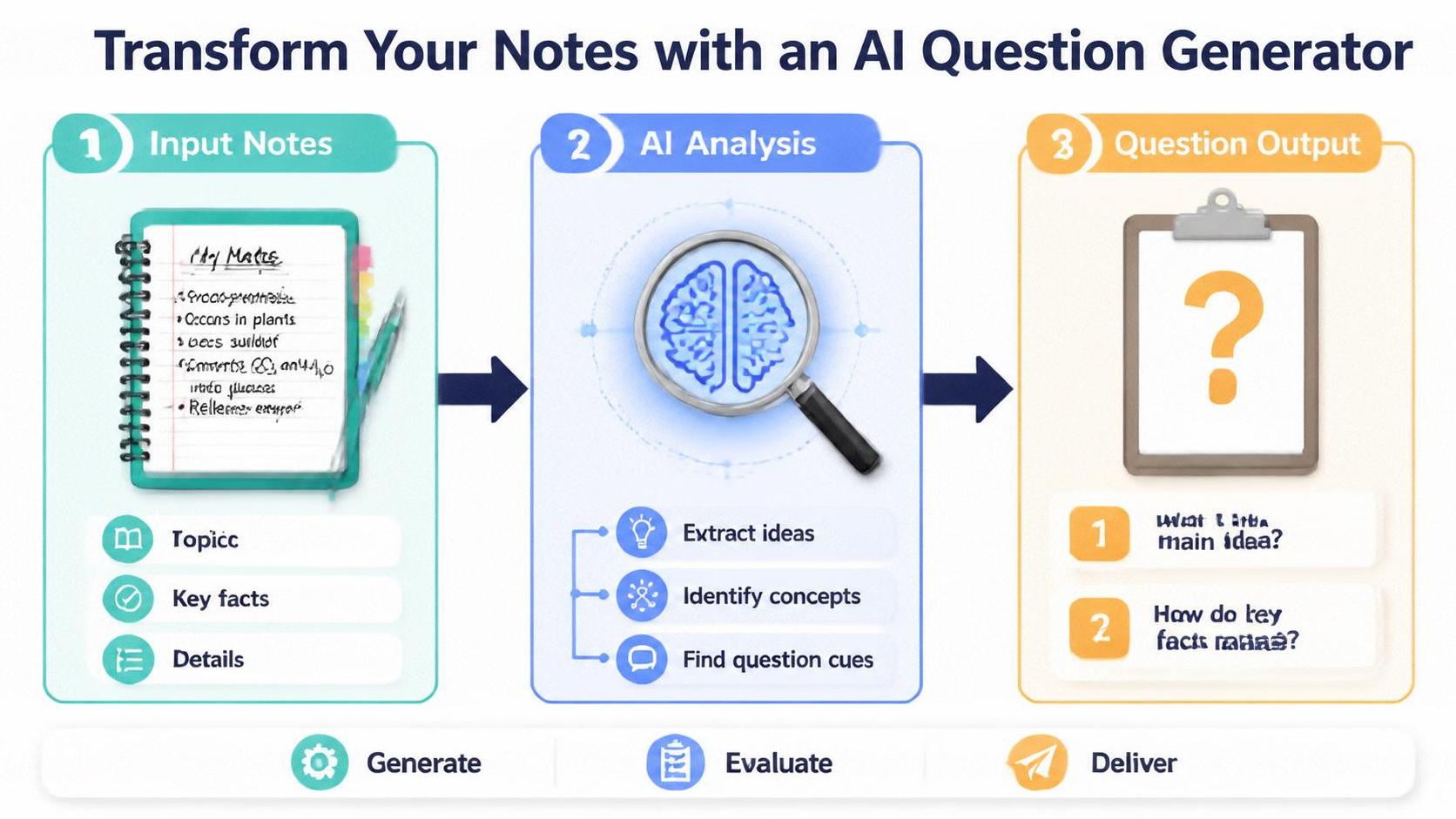
Next, the AI employs question formation techniques. This often includes converting statements from the notes into interrogative forms, formulations that require a response, or prompts that encourage further exploration of the subject. For instance, if the notes contain a statement like "Photosynthesis occurs in plants to convert light energy into chemical energy," the AI might generate questions like "What process allows plants to transform light energy?" or "How do plants utilize sunlight during photosynthesis?" This process of generating questions promotes active recall, a critical component of effective learning.
Applications in Education
AI question generators offer numerous applications in educational settings. For educators, these tools enable the creation of tailored assessments, quizzes, and review materials that can align closely with specific learning objectives. Instead of manually devising questions, teachers can utilize AI-generated prompts to gauge student comprehension and encourage critical thinking.
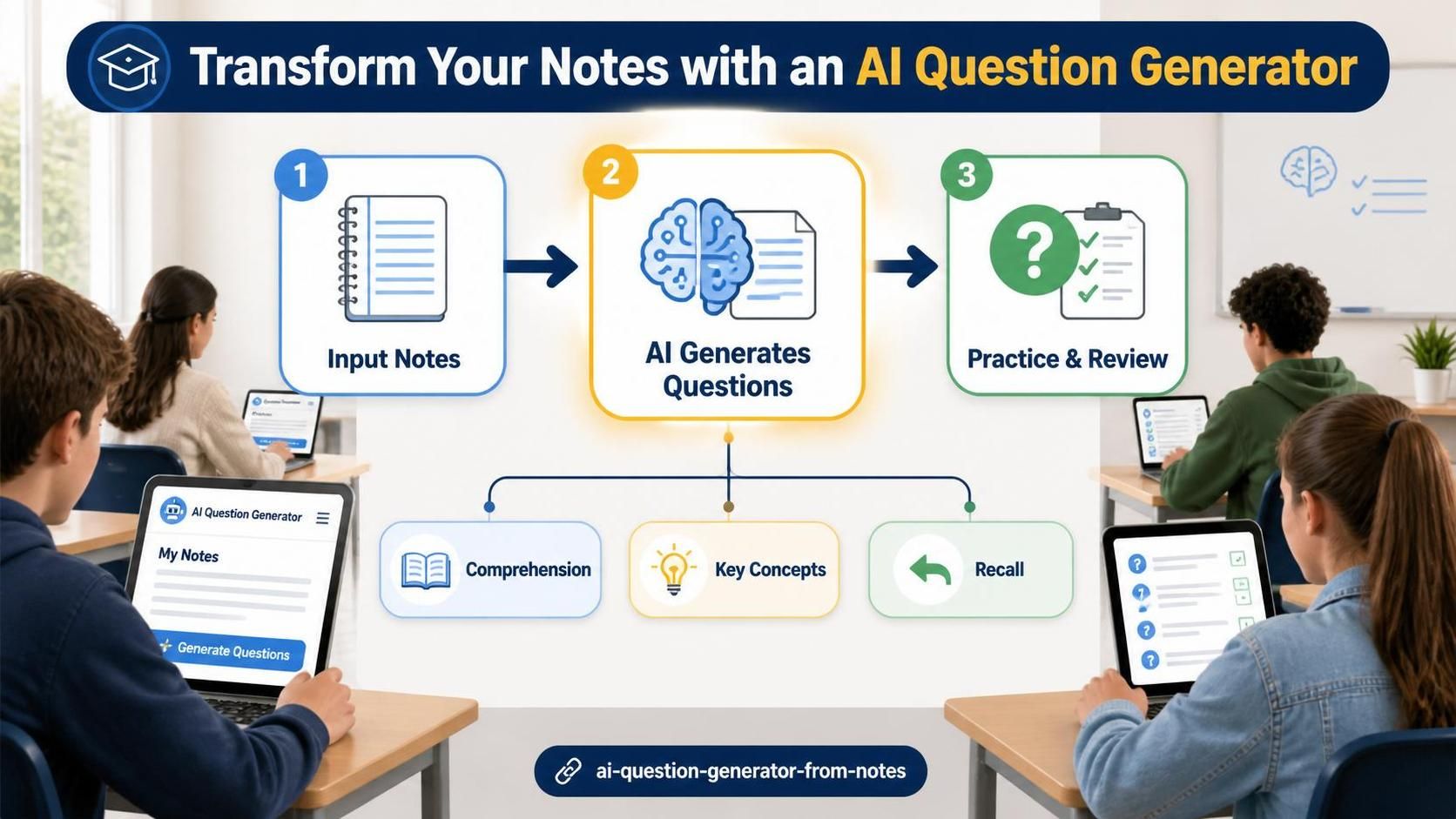
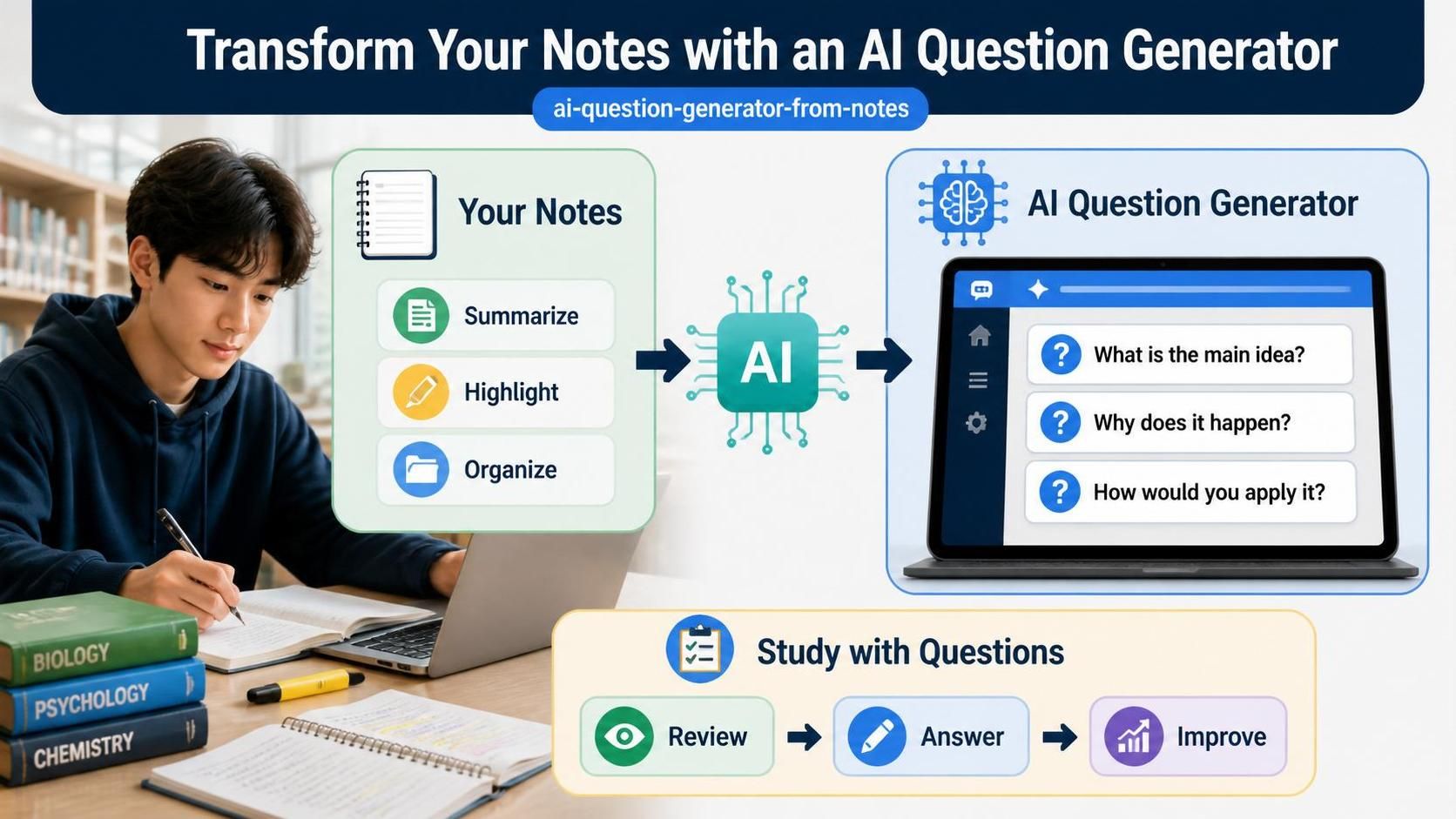
Students, too, can benefit significantly from this technology. By converting their lecture notes or textbook summaries into questions, they can enhance their study habits. This method transforms passive review into an interactive learning experience, where students are not merely reading but actively engaging with the material. Moreover, such tools can help students identify gaps in their understanding, prompting them to revisit topics that require further study.
For professionals, especially those in fields requiring ongoing education and certification, ai-question-generators can aid in preparing for exams or assessments by creating practice questions and flashcards from training materials and extensive notes.
Best Practices for Using AI Question Generators
While the benefits of ai-question-generators are apparent, maximizing their potential involves employing best practices. Here are several guidelines to consider:
1. Input Quality: The effectiveness of an AI question generator largely depends on the quality and clarity of the notes provided. Well-structured notes with clear headings and bullet points typically yield better results than dense paragraphs.
2. Contextual Relevance: Users should provide context when possible. Supplying keywords or topics related to the notes can help guide the AI toward generating more specific questions tailored to the content.
3. Iterative Feedback: Users can refine the questions produced by the AI. Engaging actively with the generated prompts by rephrasing or enhancing them can lead to a more personalized learning experience.
4. Supplementary Tools: Combining AI question generation with other study techniques—such as mind mapping, summarization, and discussion groups—can enhance the learning process. Using AI-generated questions as discussion starters or examination prompts in group settings can foster collaborative learning.
5. Regular Practice: To retain information effectively, using an ai-question-generator regularly can reinforce learning. Incorporating question generation into study routines can create a habit of active recall and self-assessment.
Challenges and Limitations
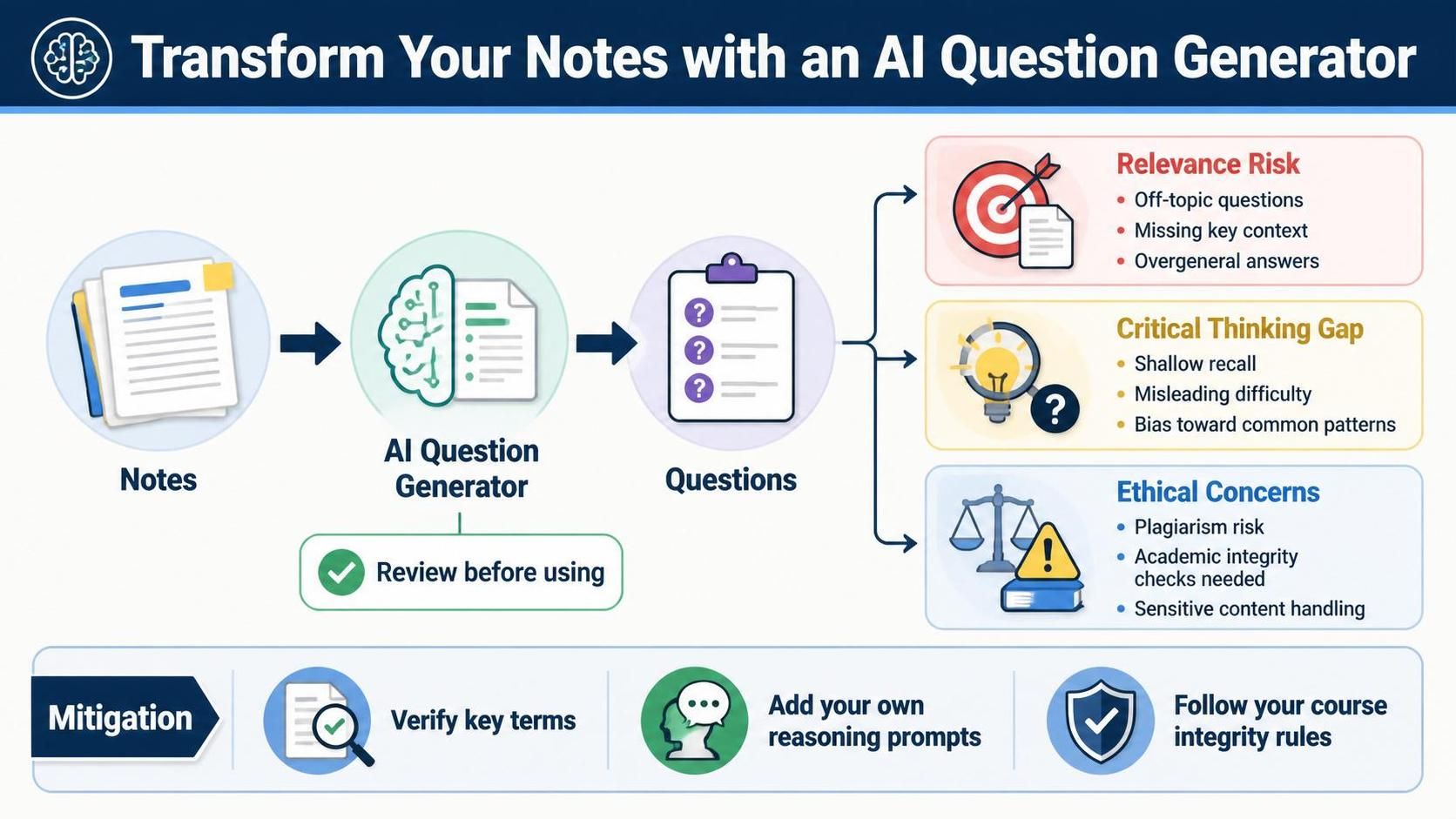
Despite their advantages, AI question generators are not without challenges. One concern is the potential for generating irrelevant or poorly constructed questions, arising from ambiguous or complex inputs. Users must be prepared to critically evaluate the questions generated and provide feedback to enhance future outputs.
Moreover, an over-reliance on technology might hinder the development of critical thinking and analytical skills. It's essential that educators and students use these tools as a supplement to traditional study methods rather than a substitute. Striking a balance ensures that users continue to engage cognitively with the material, acquiring both knowledge and the skills to apply it effectively.
In addition, privacy and ethical considerations may arise, particularly concerning the data used by AI systems. Users should be cautious about sharing sensitive or personal information when utilizing such technology, understanding how their data might be utilized or stored.
Future Trends in AI Question Generation
As technology advances, the future of AI question generation looks promising. Ongoing research and development are likely to improve the accuracy and relevance of questions produced by these systems. Innovations may include deeper contextual understanding, enabling AI to tailor queries to learners' individual abilities and knowledge levels.
Integration of collaborative AI—where multiple AI systems function together—may evolve to create holistic learning environments that not only generate questions but also adapt materials and learning pathways based on individual student engagement and performance. Such developments could revolutionize personalized learning, catering to diverse learning styles and preferences.
Furthermore, the continual improvement of natural language understanding capabilities will enhance the ability of AI systems to generate higher-order thinking questions, prompting students to analyze and synthesize information rather than simply recalling facts.
Frequently asked questions
An AI question generator is a tool that uses artificial intelligence, particularly natural language processing, to analyze text and create relevant questions from that content.
The generator analyzes the input notes to identify key points and themes, then employs techniques to convert statements into question formats that require responses.
Educators, students, and professionals can all benefit from AI question generators, as they enhance learning, assessment, and study practices.
Applications include creating tailored assessments, quizzes, and review materials that align with learning objectives while promoting active engagement with the material.
Best practices include ensuring input quality, providing contextual relevance, engaging in iterative feedback, using supplementary tools, and regular practice.
Challenges include the potential for generating irrelevant questions, an over-reliance on technology that may hinder critical thinking, and privacy concerns regarding data usage.
Students can turn their notes into interactive questions, promoting active engagement and identifying gaps in understanding to direct further study.
Iterative feedback and rephrasing can refine AI-generated questions, leading to a more personalized and effective learning experience.
While they can be useful, it is important that AI question generators are used as a supplement to traditional methods to ensure critical thinking skills are developed.
Future trends may include advancements in contextual understanding, collaborative AI systems, and improvements in generating higher-order thinking questions to promote analysis and synthesis.